

The Channel Most Enterprises Still Haven't Automated: Voice
Enterprise voice AI lags due to latency and compliance. Learn how single-model voice-to-voice architectures solve these challenges for scalable, effective support.
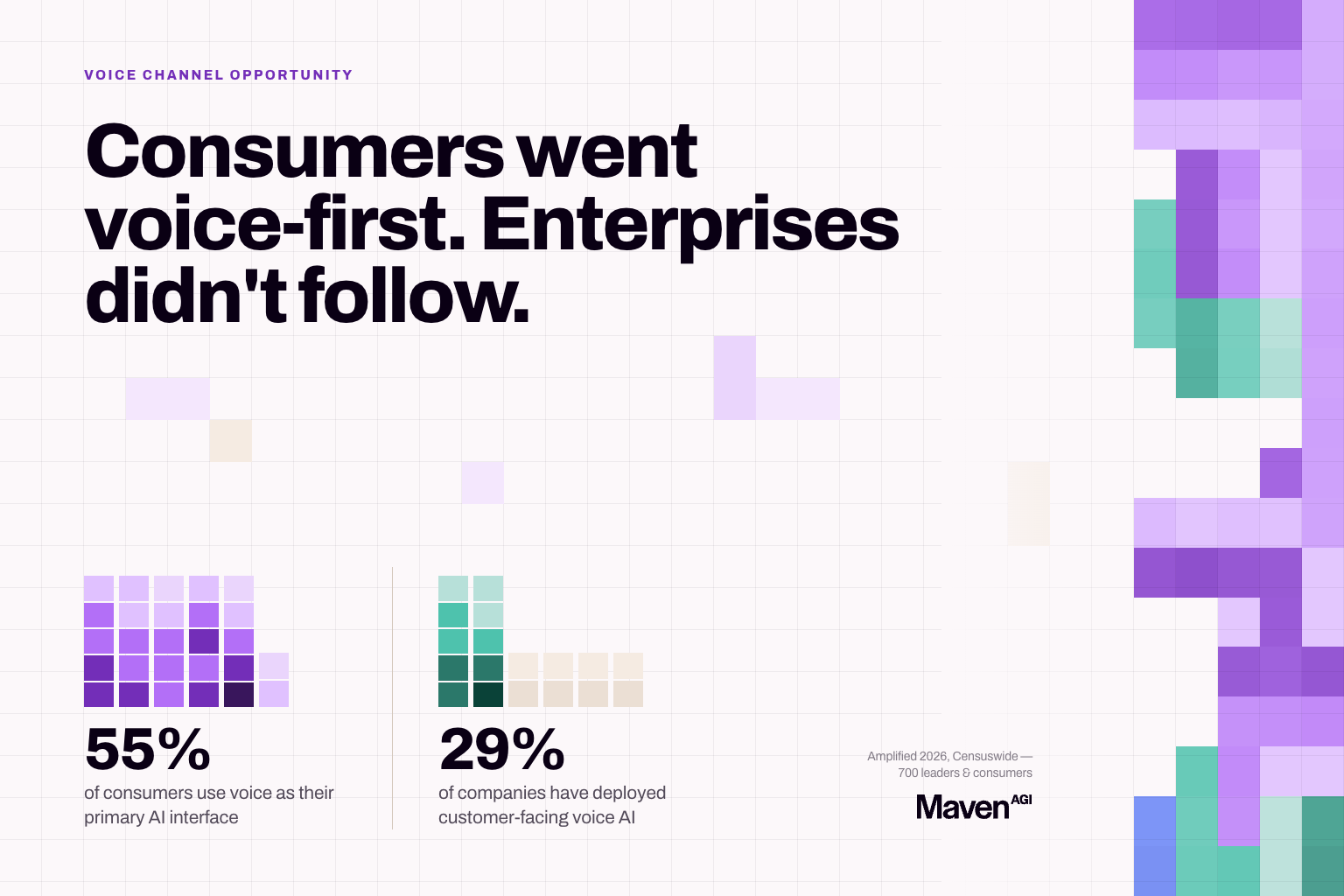
Consumer behavior around voice moved faster than enterprise readiness. Amplified 2026, a Censuswide survey of 700 business leaders and consumers, found that 55% of consumers now use voice as their primary interface for AI interactions while only 29% of companies have deployed customer-facing voice AI.
Voice is simultaneously the highest-volume, highest-cost, and most technically demanding channel in customer service, and the one where AI adoption lags furthest behind. That combination is unusual. The channel with the most cost to remove has the least competition for the advantage.
Three barriers made voice hard, and all three were real: latency, accuracy, and compliance. What changed is that they became engineering problems with answers rather than open research questions.
Why latency was the hard one
The standard way to build a voice agent chains three systems. Speech gets transcribed into text, a language model reads the text and writes a reply, and a third system speaks it aloud. Each stage works well alone. The trouble is what accumulates between them.
Every hop adds delay, and what the customer experiences is the total. Sub-300ms response is roughly the threshold for a call that feels conversational, and past about a second of silence people start talking again. A pipeline still processing the first utterance then has two overlapping inputs and no clean way to reconcile them.
The chain loses more than time. Transcription produces text, so tone, hesitation, volume, and the audible sound of someone losing patience do not survive the first hop. The model reads a flat sentence with no indication that the person who said it is about to hang up. Recovery is brittle too, because when a customer interrupts or two people talk at once, the pipeline has to detect the problem in one stage and pass that knowledge backward through stages never designed to receive it.
This is why so many voice deployments perform well in a demo and struggle on a Tuesday afternoon. Demos are quiet, scripted, and interruption-free.
What single-model voice-to-voice changes
A different architecture removes the hops. One model receives audio and produces audio, with no transcription to text and back in between.
Because the model works with sound rather than a transcript, what the pipeline discarded stays available. Interruptions arrive as interruptions. Overlapping speech, background noise, and unfamiliar accents become conditions the model handles rather than failure states that break a handoff. With no intermediate stages, the response gap closes far enough that customers stop talking over the system.
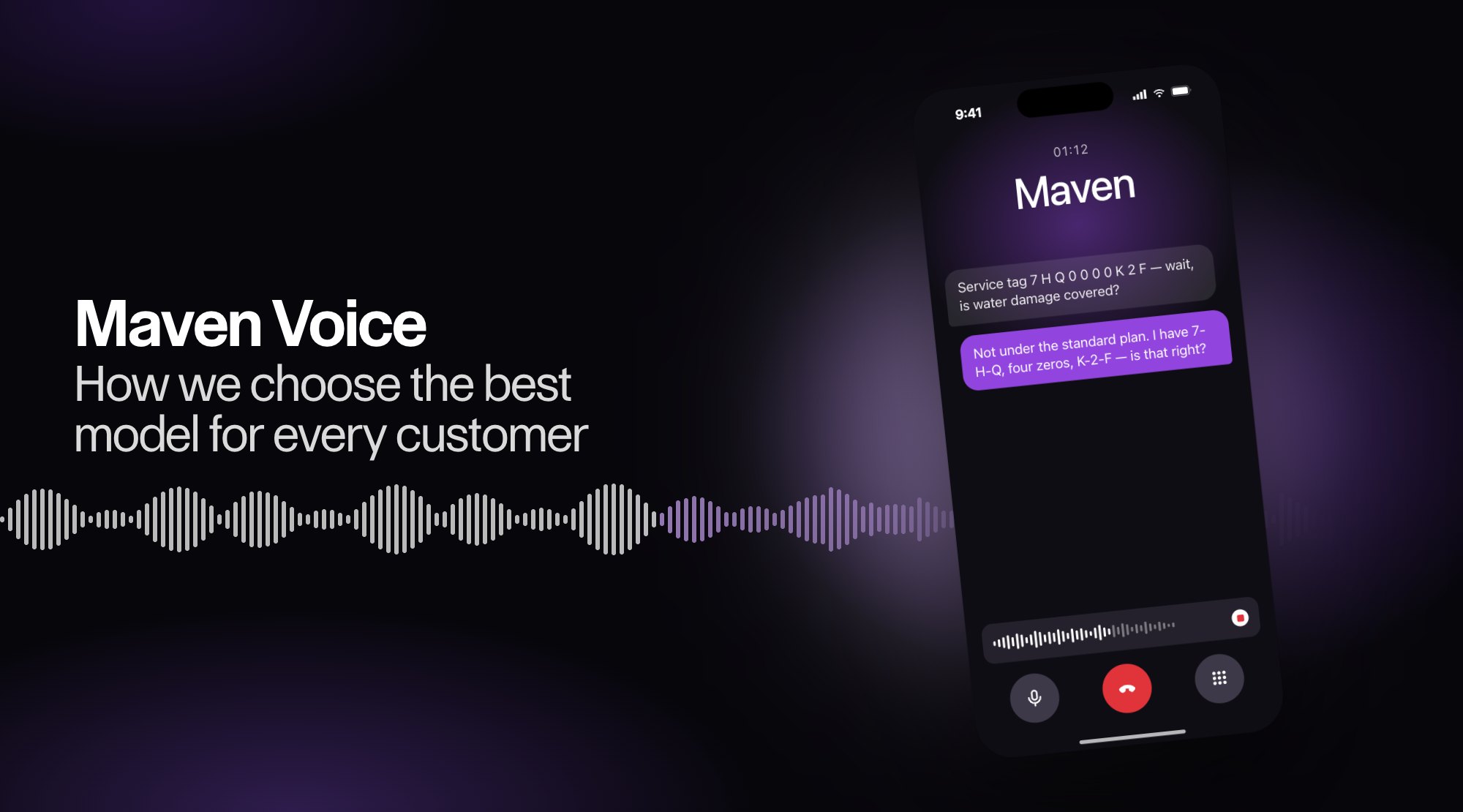
That is the mechanism behind the claim that latency and accuracy are now solved in production. Maven is the first enterprise AI platform to bring voice-to-voice agents into full production, a distinction validated by Ibex, and runs 57 languages in voice-to-voice alongside 54 in chat. In the deployments Maven has measured, well-built voice agents resolve in the same range as chat on comparable intents.
To be precise about the stack: real-time voice runs on the OpenAI Realtime API together with Cartesia voice models, and the voice agent uses the same engine as chat and email, so a customer who calls after emailing does not start over.
The three decisions that now set your timeline
With the technical barriers addressed, deployment speed comes down to a short set of choices, and in each case the faster default tends to be the safer one as well.
- Telephony. Integrate with your existing carrier and stack rather than migrating carriers. Migration is rarely worth doing first, and voice-to-voice connects to what you already run, including Twilio, Vonage, Cisco, Zendesk Talk, and Genesys.
- IVR. Overlay and augment the existing IVR rather than ripping and replacing it. Replacement has a higher ceiling and a much longer path.
- Escalation. Use a warm handoff that carries full context to the agent. A cold handoff with no context is worse than no automation at all, because the customer explains everything twice.
The compliance question voice raises immediately
On a call, customers say things you cannot store. Card numbers, health details, account credentials, all spoken aloud while asking for help.
Compliance in voice is stricter than in text, and it gets solved when the platform is built for it rather than adapted to it. The question that matters is timing. Real-time PII redaction during the call and post-processing afterward create different exposure windows, and only the first keeps the sensitive string out of the pipeline. Ask which one you are buying before the security review rather than during it.
Multilingual gets harder in voice
Text translation is solved enough that most enterprises stopped worrying about it. Voice is not equivalent. Spoken language carries accent variation, regional phrasing, code-switching mid-sentence, and speed differences that a transcript flattens away. A chained pipeline compounds this, because transcription has to guess the language before the model sees anything, and a wrong guess propagates through every stage after it.
Coverage numbers are worth pressing on. The useful follow-up for any vendor is whether the listed languages have been tested in production or simply appear in a model card.
Proof at volume
A Fortune 500 gaming enterprise operating in a regulated market runs 80% resolution across more than 330,000 monthly interactions, including 13,000 interactions resolved on a single peak event day.
Peak days are the honest test. Volume spikes are when queues blow out, when a system either holds or degrades visibly, and when customers form a durable opinion about whether calling you works.
How to evaluate voice without getting demoed
Recorded demos are not evidence. Ask for a live call, and during it, behave the way your customers behave.
- Interrupt mid-sentence and see whether the agent stops or keeps talking
- Change your mind halfway through a request
- Introduce background noise
- Speak with an accent the vendor did not plan for
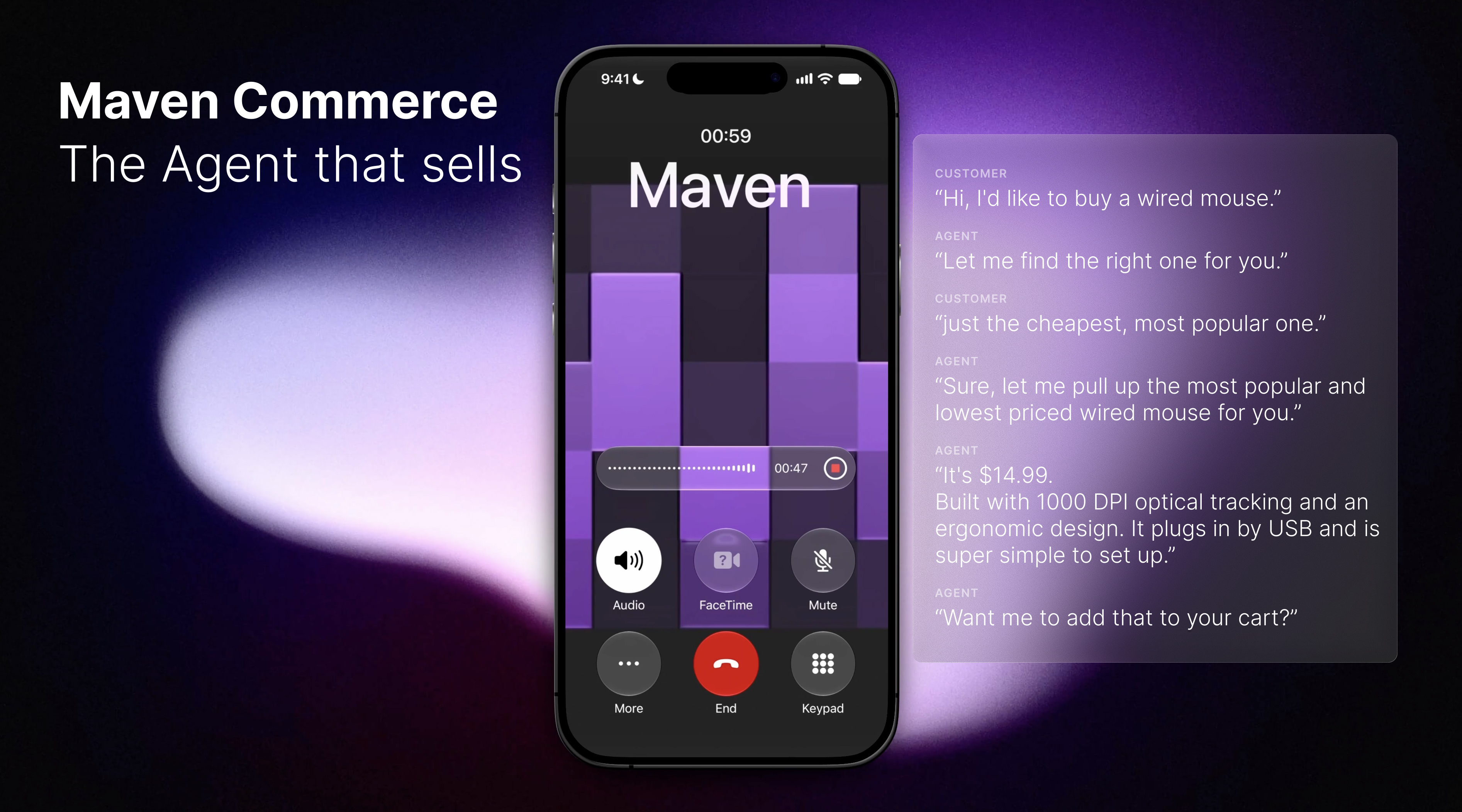
- Ask it to do something, not just to tell you something
The last one carries the most weight. Answering a question and completing a transaction are different capabilities, and autonomous resolution requires the second.
The three decisions in condensed form are in The Voice AI Decision Tree, which pairs with The 90-Day Pilot Scope for teams considering voice as their first automated channel. Both draw on the Voice Channel Opportunity chapter of the State of AI in CX 2026 report.


Don’t be Shy.
Make the first move.
Request a free personalized demo.